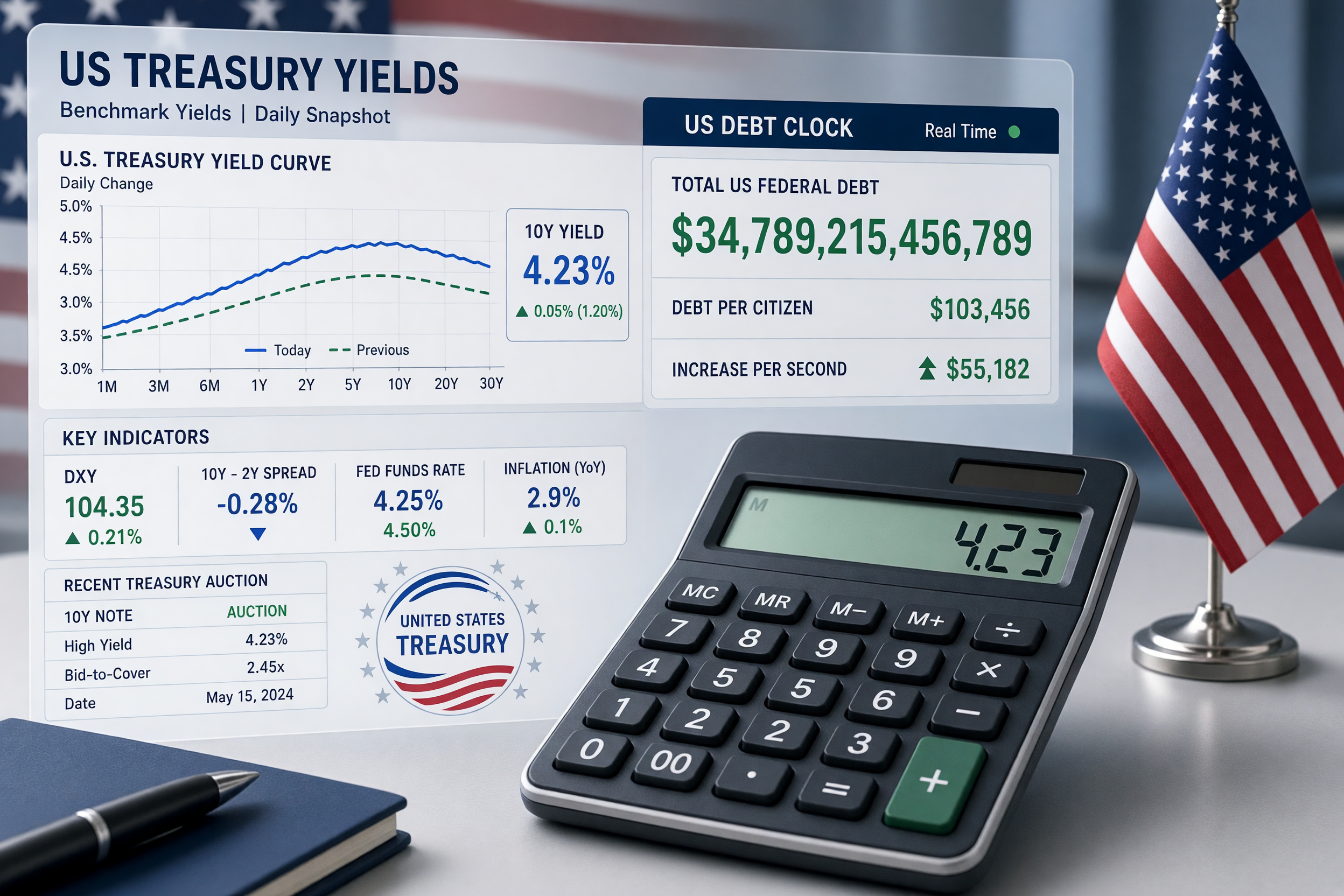
With the US national debt hitting $40 trillion in August 2026, 10-year Treasury yields climbing to 4.7%, and annual interest payments exceeding $1 trillion, many taxpayers are using a tax calculator to model potential effects on refunds and liabilities. The FY2026 deficit projection at $2.1 trillion adds further uncertainty. Running scenarios now in a tax calculator helps individuals and small business owners prepare for possible shifts in tax brackets, deductions, or refund timing driven by these fiscal pressures.
Current Fiscal Metrics and Potential Effects on Personal Taxes
The surge in Treasury yields increases government borrowing costs, which may pressure future revenue needs. This environment could influence adjustments to bracket indexing or limits on certain deductions without new legislation. Higher yields might also affect withholding calculations if policymakers respond to deficit concerns.
- Record debt levels could lead to tighter credit availability for some filers.
- Rising yields may pass through as higher inflation, altering standard deduction values over time.
- Interest payment burdens might prompt reviews of refund processing timelines.
Using a tax calculator allows you to quantify these variables based on your income and filing status.
Step-by-Step Guide to Using a Tax Calculator
Follow these steps to analyze your situation with a 2026 tax calculator:
- Enter baseline data from your 2025 return, including W-2 income, itemized deductions, and credits.
- Adjust for 2026 inflation assumptions and current yield rates.
- Model scenario 1: Higher borrowing costs leading to 2% bracket creep.
- Model scenario 2: Reduced deduction limits due to deficit reduction efforts.
- Model scenario 3: Delayed refund timing from administrative changes.
Compare outputs to see net impacts on your liability or refund amount.
Actionable Tips for Withholdings and Payments
Adjust your withholdings based on tax calculator results to avoid underpayment penalties. Consider these strategies:
- Increase quarterly estimated payments if yields suggest higher effective rates.
- Review Form W-4 updates for accuracy amid fiscal volatility.
- Plan for variable refund sizes by setting aside potential differences.
Sample outputs from a tax calculator:
| Scenario | Estimated Refund | Liability Change |
|---|---|---|
| Baseline | $2,500 | $0 |
| Yield-Driven | $1,800 | +$700 |
| Deficit Measure | $3,100 | -$600 |
These estimates help small business owners organize cash flow.
Preparing for 2027 Filings Amid Fiscal Restraint
Ongoing pressures from debt and yields point to continued monitoring. Update your tax calculator inputs regularly as new data emerges. Focus on building reserves for potential liability increases and track any IRS guidance on withholding tables.
Conclusion
Stay ahead by using a tax calculator to navigate 2026 changes from record debt and surging yields. Bookmark this page and try the tool today for personalized estimates. [Link to tax calculator tool]
Disclaimer: These are estimates only and not tax advice. Consult a professional for your situation.